Owning Your Creative Voice in the AI ERA
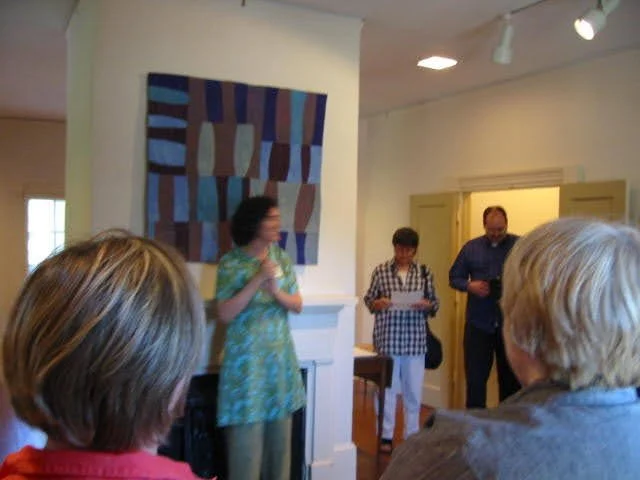
The Rhythm of Attention, solo exhibition at the Horace Williams House, Chapel Hill, NC 2003
How do you want to live your one precious creative life—copying others or discovering your own voice? Quilting has long taught copying: kits, templates, and teachers guiding precise duplication—sometimes with slight variations. There is value in learning that way—study the masters before branching out, but are you branching out? Taking risks and discovering your way of making patterns?
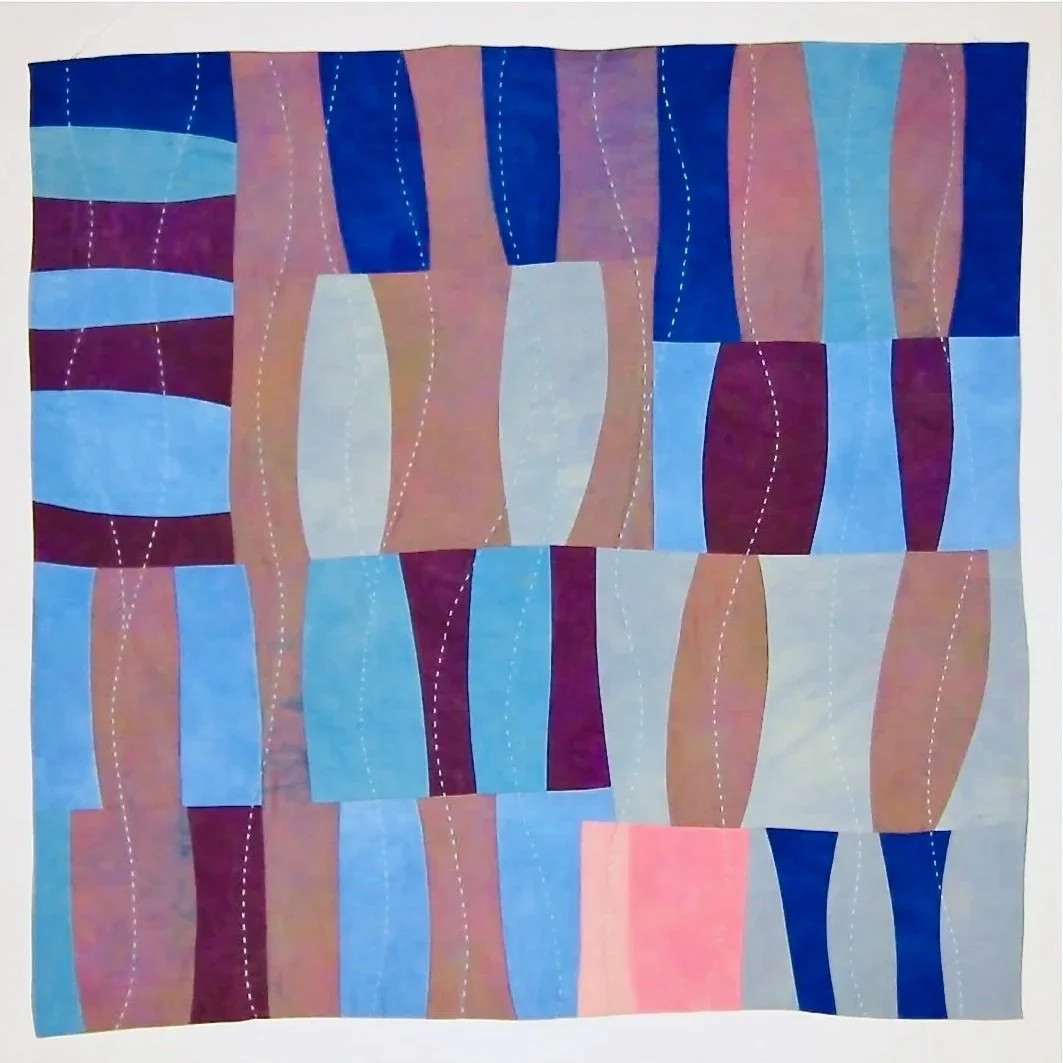
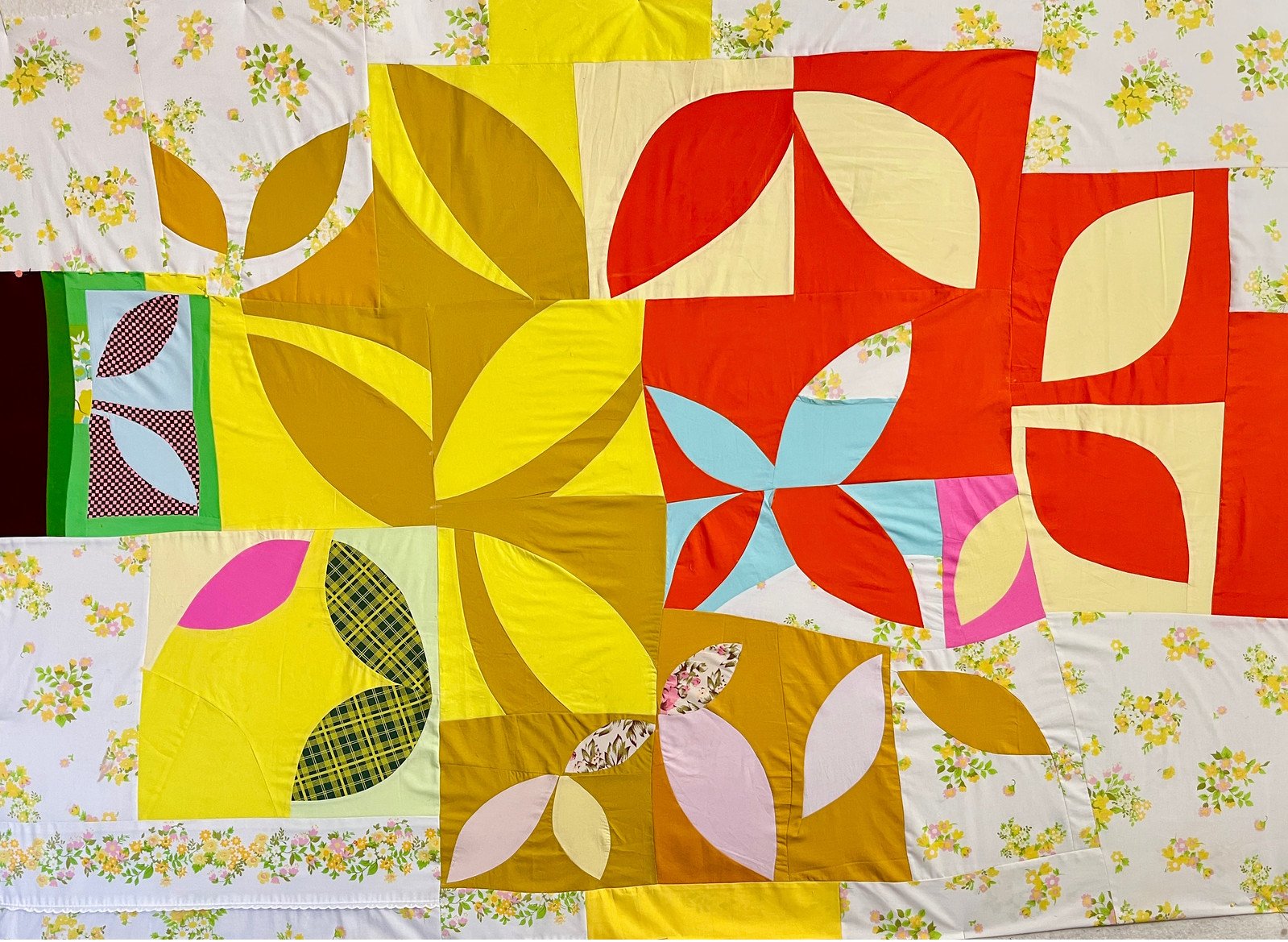
Color Study with Curves, 2001 © Sherri Lynn Wood, 60 × 60 inches, Improvised quilt, hand dyed fabric, machine pieced, hand-stitched
Twenty-five years ago I made the quilt above. In July I began featuring it to promote my fall Improv Curves Primer series. Within days a well-known quilter on my newsletter list posted a recognizable duplicate on Instagram after opening my emails. Her post trended. She didn’t acknowledge the source of her pattern inspiration. Her duplication was likely unconscious, but definitely not serendipitous due to the timing, I doubt it was intentional, or maybe she just didn’t see it as a duplicate at all.
This happens frequently in creative circles, but it still stings. Like receiving rejections, when you put your work out there, it’s important to ground the personal, emotional experience in a deeper, larger truth.
This incident got me thinking more deeply about this AI moment when all human endeavors are being consumed and copied without consequence. It’s happening and I can’t see it being rolled back.
So here’s my big question. In this era of AI what does it mean to OWN our creative output or patterns? Is it even possible? Under capitalism, maybe not. But spiritually and artistically, we can claim ownership by knowing and acknowledging our sources and owning our choices. For me that looks like selecting from my experiences and intentionally aligning my work and patterns with my truth, not someone else’s.
Ownership is a fraught concept in the context of late-stage capitalism. I prefer to think of ownership as stewardship, which implies responsibility. How can we take responsibility for and own our creative trajectories?
AI does not make choices, it calculates. It consumes, remixes and outputs. This is a different process of creation—different from human imagination and choice. I refuse the model of a calculating computer to describe the human act of creativity, which includes the soul, the heart, the body and the spirit, not just our pre-frontal cortex.
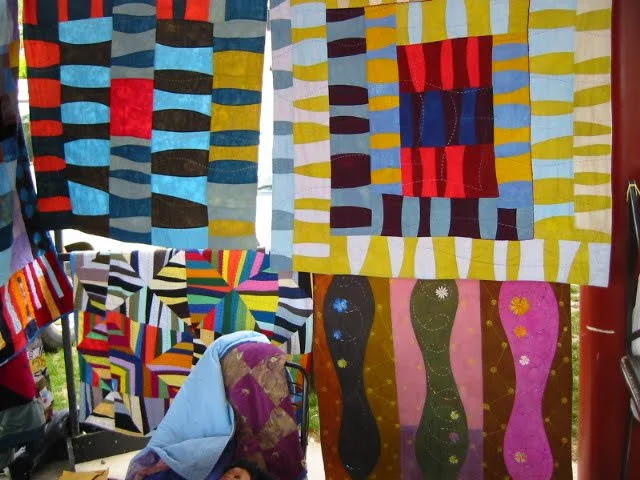
My booth and quilts at the Carrboro, NC farmers’ market, 2000
Even as AI-made work becomes increasingly indistinguishable from its human sources, as human creators we can stand our ground by owning our decisions, knowing our influences, and aligning our truth with our values. That won’t stop copying or marketplace theft, but it will safeguard the deep well of our creative flow, inspiration, and imagination. It will keep us from falling into creative ruts, though it requires integrity and a responsibility to educate audiences about our choices and sources, when we share work publicly.
For now it’s fairly common among most quilters to acknowledge their sources of inspiration when they exhibit or share on social media —for example, if a quilt began in a workshop, or was directly and recently inspired by someone else’s original quilt, pattern, color-work or techniques.
In this AI era, copying and appropriation is becoming normalized and less conscious. AI tells us that it’s no longer necessary to create with integrity. There will be internal consequences as this new norm takes root. More makers may lose touch with who they are and why they create, because they will be disconnected from their true source. They may get stuck in creative ruts, because they have no sense of what stories are theirs to tell. As a species we may even loose our agency —our ability to imagine, think and act creatively.
For many quilters, making studies of other people’s trendy patterns—sometimes with small variations—will seem enough, but is that enough for you? How do you want to live your one true and precious creative life? How is the arrival of AI shaping your creative integrity?
If this resonated, and you would like to build on the conversation, please share your thoughts below and I will respond in the comments.
Search the Improv Quilting Blog
Related Posts
So here’s my big question. In this era of AI what does it mean to OWN our creative output, your voice or your patterns? Is it even possible? Quilting has a strong tradition of copying, is that enough? How do you want to live your one true and precious creative life?